El Niño: Insights for the Floral Industry
July 2026, powered by FloraLife
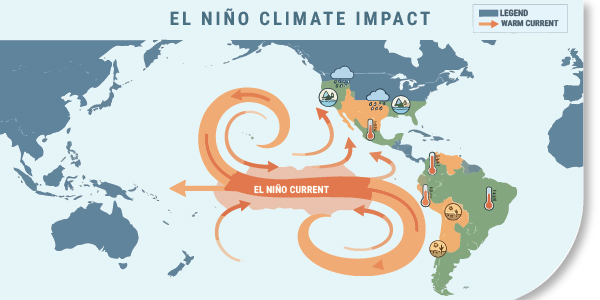
Sometimes we hear El Niño mentioned in weather reports and the impact it has on conditions around the world, but have you ever wondered what El Niño really is? What does it mean for all of us, and how might it affect the flower industry?
El Niño is one phase of a naturally occurring climate pattern known as the El Niño-Southern Oscillation (ENSO), with its opposite phase known as La Niña. This cycle develops across the tropical Pacific Ocean and typically occurs every two to seven years, although its timing, duration, and intensity are difficult to predict. Despite this uncertainty, El Niño’s influence on global weather patterns is significant and can affect agricultural production in many flower-growing regions around the world.
While the specific impacts vary by location, El Niño can create a range of weather-related challenges that may affect flower production, quality, and supply chains. Some potential impacts include:
Drought
In many regions, El Niño is associated with below-average rainfall and prolonged dry conditions. Drought can place significant stress on flower crops, reduce water availability for irrigation, increase production costs, and heighten the risk of wildfires. Growers may need to carefully manage water resources to maintain crop quality and yields.
Crop Stress and Reduced Yields
Extreme weather conditions, whether caused by drought, excessive heat, or irregular rainfall, can affect plant development and lead to lower yields. Flower crops may experience slower growth, reduced stem quality, smaller blooms, or increased susceptibility to pests and diseases.
Water Shortages
Reduced precipitation can lower water levels in rivers, lakes, reservoirs, and groundwater sources. As competition for water resources increases, agricultural operations may face irrigation restrictions or rising costs, creating additional challenges for growers.
Temperature Extremes
El Niño often influences temperature patterns around the world. Some regions may experience unusually high temperatures, while others may see warmer-than-average seasons. Heat stress can affect flower development, shorten vase life potential, increase irrigation requirements, and place additional demands on cooling systems and greenhouse operations.
Flooding and Excessive Rainfall
While some areas become drier during El Niño, others may experience heavier rainfall and flooding. Excess moisture can lead to waterlogged soils, root damage, disease pressure, transportation disruptions, and delays throughout the supply chain.
Impacts on Ecosystems and Pollinators
Changes in weather patterns can alter local ecosystems and affect the populations of insects, pollinators, and other beneficial organisms. Shifts in pest and disease pressures may also require growers to adapt their crop management strategies throughout the season.
These are all possible outcomes, but nothing is set in stone. The impacts of El Niño vary widely from one event to the next and from region to region. Some areas may experience only minor changes, while others may face significant weather-related challenges. Understanding and preparing for these potential impacts can help growers, distributors, and retailers respond more effectively when conditions change.
What Can We Do?
It may seem like there is little we can do against the forces of nature, but staying informed is one of the most effective tools available. Monitoring forecasts and understanding developing El Niño conditions can help the floral industry prepare for potential disruptions and make proactive management decisions.
FloraLife is prepared to support the floral industry through changing conditions with proven products and protocols. Contact your local FloraLife representative for more information and tailored recommendations.